
Why Authenticity Matters More Than Gravitas
A conversation with CaSA Inclusive Leadership Award winner Eve Taylor
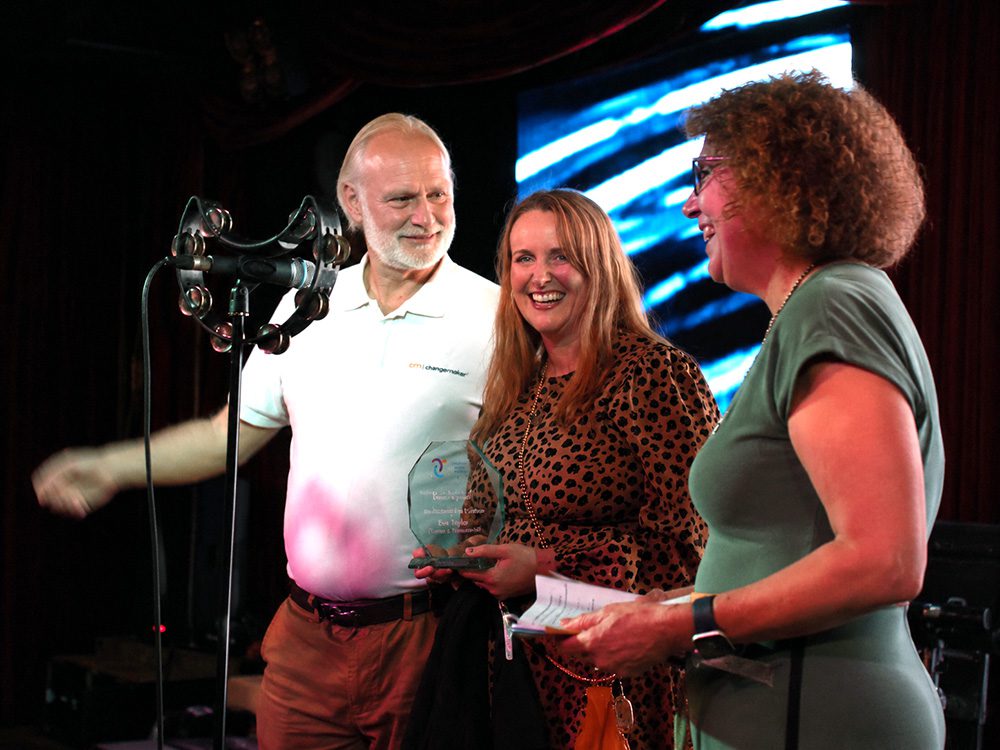
When changemaker sponsored the Inclusive Leadership Award at the 2026 CaSA Conference, we were looking to celebrate something we care deeply about. Not just leadership – human leadership. The kind of leadership that helps people feel supported, included and confident enough to navigate change.
Following the awards, we had the opportunity to sit down with this year’s winner, Eve Taylor from Turner & Townsend. What followed wasn’t a conversation about winning awards. It was a conversation about vulnerability, authenticity, belonging and the reality that leadership comes in many different forms.
For Eve, leadership has never been about projecting certainty or trying to fit a traditional mould. In her award submission, she described her leadership approach as:
“Laying my own cards on the table – imposter syndrome, self-doubt, insecurities – aiming to demonstrate an alternative leadership role model to the confident born leader with an air of natural gravitas.”
That idea resonated strongly with us because too often, leadership is associated with the loudest voice in the room, the strongest personality, or the person who appears to have all the answers. Yet some of the most impactful leaders are those willing to be human.
Leadership Through Service
Throughout her career, Eve has worked across major programmes, project controls, planning, transformation, wellbeing and early careers development. Her influence today extends across regional leadership, wellbeing initiatives, recruitment, mentoring, learning and development, and team leadership.
Yet when discussing leadership, she consistently returns to people. Her leadership style is grounded in a simple principle: roll your sleeves up and be present.
She describes herself as “boots on the ground” when things get difficult. A leader who prioritises integrity, fairness and transparency. Someone willing to have difficult conversations while helping people understand the reasons behind decisions. It’s a style built on trust rather than hierarchy.
Building Inclusive Teams
One of the strongest themes throughout our conversation was inclusion. Not inclusion as a policy, inclusion as a behaviour.
Eve spoke passionately about creating environments where opportunities are visible to everyone, not just those with the loudest voices or greatest visibility. Whether through open communication, development opportunities, wellbeing initiatives or team leadership, her focus has been on creating space for people to contribute in ways that work for them.
One insight particularly stood out:
“Active participation isn’t the only participation. Spectators are welcome too.”
It’s a simple statement, but an important reminder that people engage differently. Some contribute through discussion, some through observation, some through action. Inclusive leadership creates space for all of them.
The Importance of Belonging
For Eve, belonging sits at the heart of high-performing teams. Creating trust means helping people feel comfortable bringing their whole selves to work. It means being available through different communication channels.
Recognising different personalities, understanding that everyone responds differently to challenge, opportunity and change. It also means being willing to advocate for people when circumstances require it.
As she explained, leadership often involves balancing business needs, client needs and people needs.
Sometimes those priorities align, sometimes they don’t. The challenge is having the courage and judgement to navigate that balance fairly.
Learning Through Reflection
Perhaps the most powerful part of our discussion centred on what Eve has learned along the way. Many leadership conversations focus on strengths, this one focused equally on self-awareness.
She reflected openly on times when her desire to protect others may have unintentionally limited their growth.
On carrying too much responsibility herself, on working too hard, setting unhealthy boundaries and allowing resilience to become tolerance.
These reflections led to several lessons that now shape her leadership approach:
• Play to your authentic strengths.
• Win hearts before minds.
• Share the load.
• Create conditions where people hold themselves accountable.
• Recognise when strengths become overplayed.
• Balance emotion with objectivity.
• Be fair to yourself, not just others.
It’s a level of honesty that many leaders recognise, but few openly discuss.
What Future Leaders Need to Hear
Towards the end of our conversation, we asked Eve what advice she would give to the next generation of leaders.
Her answer was refreshingly simple.
• Run your own race.
• Don’t build your career around tick boxes.
• Don’t pursue opportunities simply because they look like the next logical step.
Instead, focus on the things you genuinely care about. As she put it:
“Do what you do because you have a passion for it. Don’t do things to tick boxes.”
The recognition, growth and opportunities tend to follow when people commit themselves to work that genuinely matters to them.
The changemaker Reflection
At changemaker, we believe change succeeds when people succeed.
Leadership plays a central role in that. Not leadership as a title, not leadership as a hierarchy but leadership as behaviour.
The leaders who create lasting impact are rarely remembered for their authority; they’re remembered for how they made people feel; supported, trusted, included, capable.
This conversation with Eve was a reminder that leadership doesn’t have one shape, and perhaps that’s exactly why it works.
Congratulations again to Eve Taylor on becoming the recipient of the CaSA Inclusive Leadership Award and thank you for sharing your experiences so openly.
The industry needs more leaders willing to show that authenticity and humanity are not alternatives to leadership.
They are leadership!